


What are they and why do varicose veins appear?

Content
- In short
- Why do varicose veins appear?
- In conclusion
- Photo 1 - Varicose veins dilatation both on the thigh and on the extended leg on the ankle but with colour and looking normal
- Photo 2 – Leg without varicose veins where a profound change in the skin of the calf, is red, looks like bark, hard to the touch.
- Photo 3 - Varicose veins in the inguinal region
 Varicose veins are veins whose structure and function are altered compared to a normal vein. Often, but not always, the veins are visibly dilated and have a tortuous appearance. Varicose veins are known by humanity from the deepest times of history. From the first description of varicose veins, present in the Egyptian writings, passing through India and ancient Greece, in which the stages of treatment of varicose veins are described in detail and until the recent definition of varicose veins, they occupy the central place in the approach without really thinking about why they appear and what lies behind them (Photo 1).
In short
Varicose veins are veins whose structure and function are altered. Varicose veins are of 2 types: primary whose cause is reflux from deep veins in the superficial and secondary varicose veins that occur as a result of an obstruction in the venous circulation. The VASCULARTE protocol for identifying the cause includes Doppler ultrasound examination, a transvaginal ultrasound, intra-abdominal vein ultrasound, VenoAngio CT and VenoAngio MRI. In this regard, Dr. Toni Feodor described and published the classification of junction reflux, an extremely useful way to identify the cause of varicose veins and the risk of recurrence.
Why do varicose veins appear?
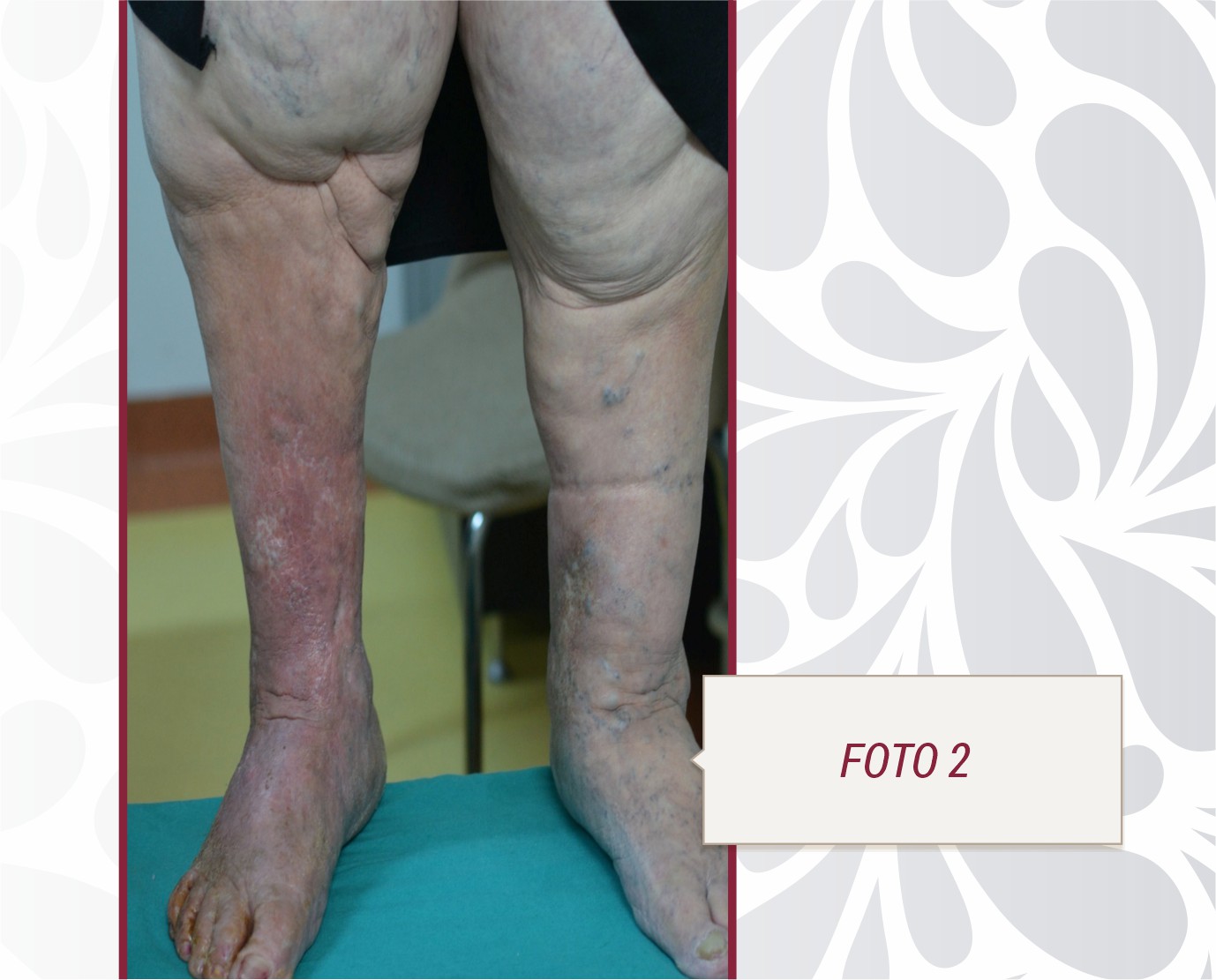 Although there are risk factors that predispose to varicose veins, we know that they occur in both women and men. In women who have given birth as well as in those who have not given birth, they appear in the case of obese as well as in the very thin people, in those with family varicose vein history and in those who do not have anyone with varicose veins in the family. Varicose veins occur in sedentary people and athletes, the elderly and young people, both fast-food eaters and vegetarians. However, what do these patients with varicose veins located in different parts of the leg have in common (Photo 2)? In both situations (Photo 1 and Photo 2) we have saphenous veins that do not work normally. They show reflux. However, if we have varicose veins, the skin suffers less compared to the leg that does not have varicose veins.
Research shows that there are two important factors in initiating this process: the hemodynamic factor and the inflammatory phenomenon in the vein wall.
The hemodynamic factor is represented by the characteristics of venous circulation, circulation speed, resistance to flow, blood pressure in the veins, all of which strongly influence the structure and function of the vein. Let's take an experiment that proves the importance of this hemodynamic factor in the health of the vein. A chicken embryo, an egg was taken and the heart was removed, then the egg was subjected to increased oxygen pressure. The result was surprising: all the baby's organs were formed, but not the blood vessels. The conclusion of the study shows how important the parameters of circulation are in the health of blood vessels.
 In the case of veins, if we sit on the chair, for example, the blood stagnates, the pressure increases and the white cells adhere to the vein wall, pass through it and begin another process, inflammation that initiates the process of vein remodelling, that consists in the appearance of varicose veins. As can be seen in the image with suprapubic varicose veins (Photo 3), the body manufactures them when it is an obstacle in the venous circulation. Varicose veins in the groin region extend to the suprapubic region are varicose veins that appeared 6 months after deep vein thrombosis and whose appearance led to deflation of the leg. If we removed these varicose veins, the leg would swell again. Therefore, the presence of these varicose veins to avoid an obstacle in the venous circulation is "life-saving".
Everything leads to one conclusion: it is not the varicose veins that should catch our attention, but the cause that led to their appearance, the cause that must be identified, diagnosed and treated. The principle of diagnosis and treatment in BVC of the Vascularte clinic is based on this principle.
In this case, we are talking about secondary varicose veins that occupy a minor proportion approx. 15 of the cases. The varicose veins in the first image are the primary varicose veins whose causes of occurrence we do not know, we only know the anatomical and functional already existing changes but we do not know the initial element that determined the appearance of these varicose veins.
When we walk, the blood caresses the inside of the vein and has an anti-inflammatory, anti-aggregating and anticoagulant effect. Where does this initial process of varicose vein formation begin, at the level of the valves or the level of the vein wall? Recent research in the field of vein biology shows that this process begins both at the level of the valves which are sensitive structures and along the entire vein.
In conclusion
Fundamental research and epidemiological data show that the initial factor in the appearance of varicose veins is the hemodynamic factor, followed by inflammation of the vein which causes changes in the structure and shape of the vein. These mechanisms occur both in the valve (valvular theory) causing lesions with reflux and focal changes along the entire vein (parietal theory). The implications of these data are extremely important in terms of treatment and prophylaxis of varicose veins.
In conclusion, there are two types of varicose veins: primary, which appear initially as a result of changes in circulation parameters: pressure, speed, flow resistance and secondary varicose veins of an obstruction. The next step is inflammation that will reshape the vein wall, turning the vein into varicose veins.
The protocol of the Vascularte clinic contains recommendations regarding the influence of the 3 factors that contribute to the venous return (vis a fronte, vis a tergo, vis a latre) and has a complete guide of exercises for venous circulatory recovery.